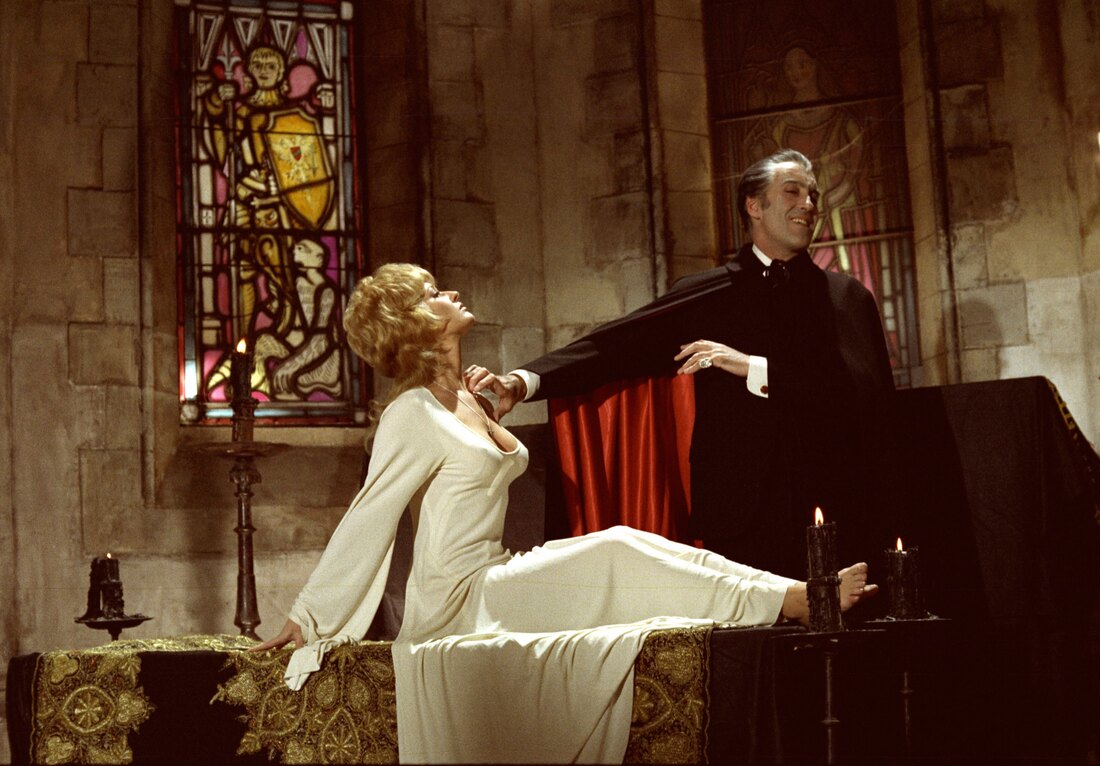
 Movie Review: Dracula A.D. 1972 (1972) Directed by: Alan Gibson Starring: Christopher Lee, Peter Cushing, Stephanie Beacham, Christopher Neame By the early 1970s, Hammer Films found itself at a crossroads. The Gothic horror formula that had sustained the studio since Horror of Dracula (1958) was losing its grip on audiences drawn to the modern, more visceral horror of the era. Dracula A.D. 1972, directed by Alan Gibson and produced by Hammer stalwart Michael Carreras, stands as the studio’s bold attempt to breathe new life into its vampire saga—by dragging Count Dracula, fangs first, into swinging London. The film opens promisingly with a flashback to 1872, as Lawrence Van Helsing (Peter Cushing) and Count Dracula (Christopher Lee) engage in a thrilling carriage-top duel that ends in both their deaths—or so it seems. Fast forward a century, and London is now awash in mod culture, nightclubs, and disenchanted youth. Among them is Jessica Van Helsing (Stephanie Beacham), the great-great-granddaughter of the famous vampire hunter. Her friend Johnny Alucard (Christopher Neame)—whose name gives away his allegiance to anyone paying attention—lures her and her companions into a Satanic ritual that resurrects Dracula in a desanctified church. The film’s greatest asset remains the enduring presence of Christopher Lee and Peter Cushing. Though they share tragically little screen time together, their gravitas grounds the film’s more absurd conceit. Cushing’s Van Helsing, now a genteel academic battling not just evil but youthful skepticism, lends an air of dignity and continuity to the series. Lee, meanwhile, rises above some uninspired dialogue with his customary menace and icy authority; even when the material verges on camp, he never winks at the camera. Where Dracula A.D. 1972 falters is in its attempt to reconcile Hammer’s old-world atmosphere with modern trappings. The disco-era slang, psychedelic editing, and youth culture caricatures now feel dated in the most charmingly awkward way possible. Yet, the clash of styles also gives the film a curious energy. Don Sharp’s earlier Kiss of the Vampire and The Devil-Ship Pirates were lush and classically styled--Dracula A.D. 1972, by contrast, feels like Hammer trying to imitate A Clockwork Orange by way of Scooby-Doo. Still, beneath its period quirks lies an earnest attempt at reinvention. The film boasts some moody lighting, stylish production design, and a memorably eerie use of the abandoned church setting. Michael Vickers’ jazzy score, while jarringly out of place at times, contributes to the offbeat tone that makes the film strangely endearing today. While purists may lament the loss of Gothic grandeur, Dracula A.D. 1972 remains a fascinating cultural artifact—a snapshot of Hammer at its most self-conscious and experimental. It may not have restored Dracula to his former glory, but it gave him a curious new lease on (un)life, paving the way for the even more eccentric The Satanic Rites of Dracula the following year. Verdict: A flawed but entertaining oddity—part Gothic throwback, part groovy time capsule—that proves even in the age of bell-bottoms and amplifiers, Christopher Lee’s Dracula still casts one hell of a shadow. Rating: ★★★☆☆ (3/5 stars)
0 Comments
Leave a Reply. |
Classic Movie VaultOur classic movie and tv show appsavailable for free on the Roku streaming platform. Categories |

 RSS Feed