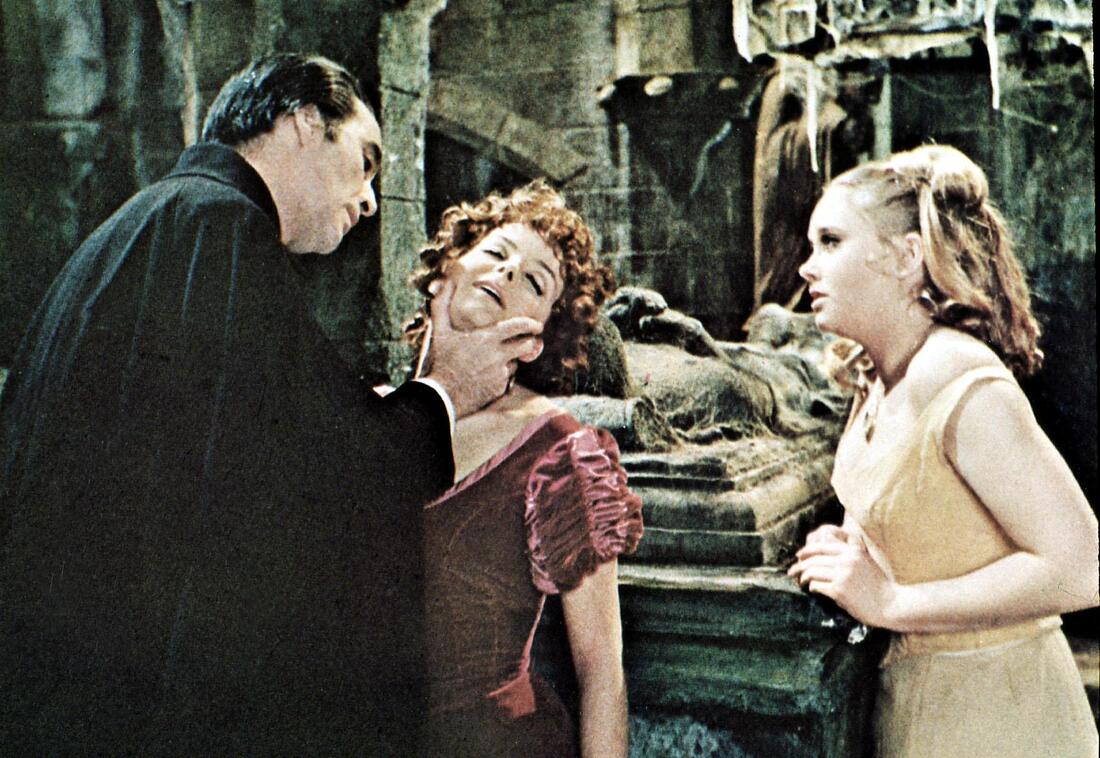
 Movie Review: Taste the Blood of Dracula (1970)
Directed by: Peter Sasdy Starring: Christopher Lee, Ralph Bates, Linda Hayden By the dawn of the 1970s, Hammer Films was navigating the shifting landscape of horror cinema. Audiences were demanding more shock, more sensuality, and more modern darkness. Taste the Blood of Dracula—the fifth entry in Hammer’s Dracula series—arrived at that crossroads, marrying the studio’s gothic tradition with a newfound appetite for moral decay and sleaze. The result is a film that, while uneven, stands as one of the more interesting entries in the saga. The film opens with a striking premise: three respectable Victorian gentlemen, bored with their genteel hypocrisy, seek new thrills in the occult. They are lured by the debauched Lord Courtley (Ralph Bates), who promises a ritual unlike any other. The ceremony, involving the powdered blood of Count Dracula, leads to Courtley’s death—but his resurrection comes in the form of the Count himself (Christopher Lee), risen once more to exact vengeance on the trio and their families. It’s a clever twist, placing Dracula as a figure of retribution rather than mere predation. The true villains, at least initially, are the pompous moralists who indulge in sin only to recoil from its consequences. Director Peter Sasdy, in his Hammer debut, brings a more psychological and class-conscious touch to the familiar formula, making this less a monster movie and more a condemnation of hypocrisy in Victorian society. Christopher Lee, though reportedly frustrated with the minimal dialogue written for him, imbues Dracula with his customary gravitas. His presence dominates every scene he’s in, even though the Count doesn’t appear until nearly halfway through the picture. Bates, meanwhile, nearly steals the show with his short but flamboyant turn as Lord Courtley, a character who feels like a decadent echo of Hammer’s Dr. Jekyll and Rasputin archetypes. Visually, the film remains firmly within Hammer’s lush gothic aesthetic—cobwebbed churches, candlelit crypts, and bursts of crimson blood against velvet darkness. Yet it also hints at the studio’s coming stylistic shift: the violence is more overt, the eroticism more pronounced, and the moral line between the damned and the righteous increasingly blurred. If Taste the Blood of Dracula falters, it’s largely due to pacing and structure. The absence of Dracula for much of the first act, coupled with the moralistic subplots, makes the film feel fragmented. Still, when the Count finally emerges, the payoff is satisfying—especially in the haunting churchyard climax that ties Hammer’s themes of sin and punishment into a fittingly operatic conclusion. Verdict: While not as taut or iconic as Horror of Dracula (1958) or as delirious as Dracula A.D. 1972, this entry carves its own niche as an atmospheric and surprisingly mature meditation on corruption and guilt. Rating: ★★★☆☆ (3 out of 5 stars)
0 Comments
Leave a Reply. |
Classic Movie VaultOur classic movie and tv show appsavailable for free on the Roku streaming platform. Categories |

 RSS Feed